A place for effective communication through purposeful writing and meaningful reading.
Monday, January 26, 2015
January 27
1.) Type five awesome sentences from The Road (with page numbers). Why have you selected these five?
2.) Type five other sentences, this time of the puzzling/confusing nature (with page numbers). Why have you selected these five sentences as "puzzling"?
TYPE THE SENTENCES LIKE THIS: "He looked like someone trying to feed a vulture broken in the road" (163).
Thursday, January 22, 2015
January 22 to prepare for February 20
Click on this link to view what you'll do February 20 to prepare for life beyond BVHS. Listen to Mrs. Hartz with great focus.
Tuesday, January 20, 2015
Friday, January 16, 2015
Friday, January 16
What are your three favorite statements from the prezi or the viewing notes? Why?
What are your three least favorite statements from the prezi or the viewing notes? Why?
Are there hyenas and lions in this school? Explain. 300+ words, just like all blog tasks.
Tuesday, January 13, 2015
Tuesday, January 13
Type about two claims/observations about The Lion King (involving literary criticism and theoretical approaches and lenses) I've expressed to you, one you agree with and another you disagree with. Find these claims/observations on the prezi, viewing notes, or from what I've said in class.
Type 300+ words.
Labels:
Literary Criticism,
Literary Theory,
The Lion King
Tuesday, January 6, 2015
Tuesday, January 6
2) What was the worst part of first semester?
3) Have you seen The Lion King? What do you remember about it?
4) Type one sentence from The Road and explain why it is a cool sentence.
5) What is best part about Lego technical writing?
6) What is the worst part about Lego technical writing?
Type 300+ total words to fulfill these tasks.
Labels:
The Lion King,
The Road
Tuesday, April 8, 2014
Technical Writing Blog Task 4--due April 23
Write 300+ words about the merits of technical writing practice. When/where/how will you use skills you develop when rehearsing technical writing? Attach some sort of information found on SDMyLife to earn credit.
Monday, April 7, 2014
Technical Writing Blog Task 3--due April 16
1.) In 300+ words, reflect on your writing improvement. What specifically have you worked on to communicate most effectively with a reader who is obviously outside your head and doesn't "know what you mean" automatically?
To explain her ideas, Lois Lowry had to think long and hard, indeed.
Technical Writing Blog Task 2--due April 10
2.) Explain why 7 of these words work far better than poorer options. To earn full credit on any blog task, you must write 300+ words.
Technical Writing Blog Task 1--due April 8
1.) Locate a terrific sample of technical writing. Paste the link here.
2.) Summarize the content, telling the rest of us what this sample explains.
3.) Explain why the technical writing sample you found is exceptional. You should type 300+ words for this task.
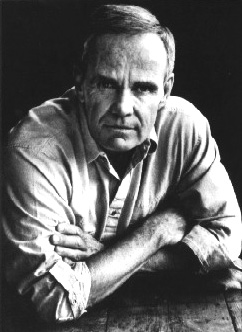
Images from actx.edu and erikjohanssonphoto.com.
Friday, December 21, 2012
Thoughts Thursday--due February 28
Select a single standard to work on in 300+ words:
KEY IDEAS AND DETAILS
RL.11-12.1 Cite strong and thorough textual evidence to support analysis of what the text says explicitly as well as inference drawn from the text, including determining where the text leaves matters uncertain.
RL.11-12.2 Determine two or more themes or central ideas of a text and analyze their development over the course of the text, including how they interact and build on one another to produce a complex account; provide an objective summary of the text.
RL.11-12.3 Analyze the impact of the author's choices regarding how to develop and relate elements of a story or drama (e.g., where a story is set, how the action is ordered, how the characters are introduced and developed).
CRAFT AND STRUCTURE
RL.11-12.4 Determine the meaning of words and phrases as they are used in the text, including figurative and connotative meanings; analyze the impact of specific word choices on meaning and tone, including words with multiple meanings or language that is particularly fresh, engaging, or beautiful. (Include Shakespeare as well as other authors.)
RL.11-12.5 Analyze how an author's choices concerning how to structure specific parts of a text (e.g., the choice of where to begin or end a story, the choice to provide a comedic or tragic resolution) contribute to its overall structure and meaning as well as its aesthetic impact.
RL.11-12.6 Analyze a case in which grasping point of view requires distinguishing what is directly stated in a text from what is really meant (e.g., satire, sarcasm, irony, or understatement).
INTEGRATION OF KNOWLEDGE AND IDEAS
RL.11-12.7 Analyze multiple interpretations of a story, drama, or poem (e.g., recorded or live production of a play or recorded novel or poetry), evaluating how each version interprets the source text. (Include at least one play by Shakespeare and one play by an American dramatist.)
RL.11-12.9 Demonstrate knowledge of the eighteenth-, nineteenth- and early-twentieth-century foundational works of American literature, including how two or more texts from the same period treat similar themes or topics.
RANGE OF READING AND LEVEL OF TEXT COMPLEXITY
RL.11-12.10 By the end of grade 12, read and comprehend literature, including stories, dramas, and poems, at the high end of the grades 12-CCR text complexity band independently and proficiently.
Thoughts Thursday--due January 24
What concept we discussed these past two weeks, whether briefly or at length, struck you as particularly fascinating and relevant? Type 300+ words extending our discussion(s) to your life experiences and the world's vastness. Connect to Mad Max, as well.
Agree. Disagree. Expand. Seek. Wonder. Ask. Muse. Doubt. Affirm. Connect. Confirm. Share. Research. React. Respond. Analyze. Assess. Align. Judge. Realize. Think. Discover. Explore. Extrapolate. Ponder.
Thoughts Thursday--due January 10
Agree. Disagree. Expand. Seek. Wonder. Ask. Muse. Doubt. Affirm. Connect. Confirm. Share. Research. React. Respond. Analyze. Assess. Align. Judge. Realize. Think. Discover. Explore. Extrapolate. Ponder.
Friday, March 30, 2012
Tuesday, August 30, 2011
Practice Blog Task--Performed in class Tuesday, August 30
Type 100+ words expressing an epiphany (or "aha" moment) you experienced during our study of The Lion King. Which lens is most helpful or revealing for you? What have you learned from the "Lenses 101" flexbook I made for you? What has been the most interesting thus far?
Also, in a separate comment, sincerely compliment a classmate's work in class or on this blog task.
Labels:
Literary Criticism,
Literary Theory
Wednesday, February 16, 2011
Read & Respond--due Friday, March 11
Click on a link at the right hand of your class blog. Read the article, review, or essay written about The Road. Then, respond to what you read with 200+ words, agreeing, disagreeing, complimenting, and criticizing the article, review, or essay and the author.
Include the title and author's name of the article, review, or essay you select.
Labels:
McCarthy,
Reader-Reponse Criticism,
The Road
Tuesday, February 8, 2011
Friday, February 4, 2011
Senselessness in The Road--due Friday, February 11

Type a paragraph/section from The Road here, selecting a passage that is not mere description or dialogue. Select a passage that seems entirely senseless or pointless--a passage that "doesn't make sense." Then, attempt to make sense out of the passage by answering these questions in 200+ words:
What meaning can you create?
What can you infer from the passage?
What symbology can you extract?
What major themes are likely present?
What can you pull out from "reading between the lines"?
Wednesday, January 12, 2011
Tone in The Road
Wednesday, September 29, 2010
Critical Lens Analysis--due Tuesday, Nov. 16
Select any exhibit and analyze it with 300+ words. Use the "Critical Lenses 101" handout. Use at least three terms/words from the "Critical Lenses 101" flexbook that you haven't used before. Look in the EXACT way the "Critical Lenses 101" handout tells you to as a critic. Ask the EXACT questions the "Critical Lenses 101" handout tells you to ask. Have the "Critical Lenses 101" handout with you as you study your exhibit and as you write this blog task. If you do not refer to the "Critical Lenses 101" handout enough or effectively, your grade will be cut in half because you are not following directions and are not thinking in the directed way.
“EXHIBIT” = novel, play, song, job, sculpture, film, poem, concert, painting, myth, sketch, poster, artwork, photograph, t-shirt, television show, biography, board game, military situation, college visit, speech, advertisement, event, place/building (school, office), game, brochure, practice, rehearsal, ritual, haircut/style, website, routine, suit coat, celebrity
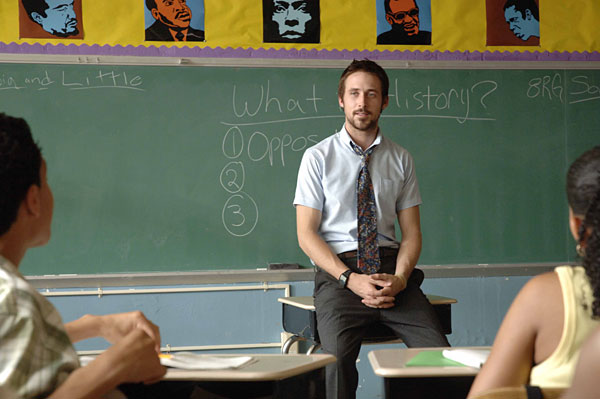
This is a picture from Half Nelson, a phenomenal film starring Ryan Gosling of (The Notebook) about a great teacher who is also addicted to harmful, horrible narcotics.
Labels:
Literary Criticism,
Literary Theory
Tuesday, September 28, 2010
Futuristic Stories--due Tue. Nov. 2
Why are futuristic novels and films so popular? What do they do to us? How do they make so much money?
Are we really that curious about the "end of things"? Why do we love to speculate about the future? Should we just focus on the present instead?
Write 300+ words answering these questions.
This picture is from the film The Road, which is about a father and son who try to survive in a world of ash and cannibalism. We'll study the novel and film.
Labels:
Lois Lowry,
Science Fiction,
The Giver
Wednesday, September 8, 2010
Critical Lens Analysis--due Tuesday, Oct. 19
Select any exhibit and analyze it with 300+ words. Use the "Critical Lenses 101" handout. Look in the EXACT way the "Critical Lenses 101" handout tells you to as a critic. Ask the EXACT questions the "Critical Lenses 101" handout tells you to ask. Have the "Critical Lenses 101" handout with you as you study your exhibit and as you write this blog task. If you do not refer to the "Critical Lenses 101" handout enough or effectively, your grade will be cut in half because you are not following directions and are not thinking in the directed way.
“EXHIBIT” = novel, play, song, sculpture, job, film, poem, concert, painting, myth, sketch, poster, artwork, photograph, t-shirt, television show, board game, military situation, college visit, biography, speech, advertisement, event, place/building (school, office), game, brochure, practice, rehearsal, ritual, haircut/style, website, routine, suit coat, celebrity
Sunday, September 5, 2010
The Giver Excerpt--due Tuesday, Oct. 5
(1) Type 30+ words directly from The Giver. (2) Then, type 300+ words explaining & analyzing this excerpt you chose. You may answer these questions to accomplish 300+ words, too:
- Why is this novel so popular?
- What parts are the most interesting?
- How did Lois Lowry create this world?
- What problems do you have with Jonas's world?
- What lessons should we learn from this novel?
Critical Lens Analysis--due Tuesday, Sept. 21
Select any exhibit and analyze it with 300+ words. Use the "Critical Lenses 101" handout. Look in the EXACT way the "Critical Lenses 101" handout tells you to as a critic. Ask the EXACT questions the "Critical Lenses 101" handout tells you to ask. Have the "Critical Lenses 101" handout with you as you study your exhibit and as you write this blog task. If you do not refer to the "Critical Lenses 101" handout enough or effectively, your grade will be cut in half because you are not following directions and are not thinking in the directed way.
“EXHIBIT” = novel, play, song, sculpture, film, poem, concert, painting, myth, sketch, poster, artwork, photograph, t-shirt, television show, biography, speech, advertisement, event, place/building (school, office), game, practice, board game, military situation, college visit, rehearsal, ritual, haircut/style, website, routine, brochure, suit coat, celebrity
Labels:
Literary Criticism,
Literary Theory
Friday, September 3, 2010
Practice Blog Task 9/14 Tuesday
Tuesday, September 22, 2009
Critical Reading Task due 10/1, Thursday, by midnight
Type 50+ words directly from the novel The Giver, from a part that is particularly good. Then type 200+ words explaining why you think this section is good.
- Does this section help your imagination work?
- Can you personally relate your life to this section?
- Are you able to connect this section to your/our/the world?
- Does this part enlighten you or give you wisdom about __________?
Tuesday, September 15, 2009
Memories & The Giver
Wednesday, September 2, 2009
The Giver Predictions & Thoughts
Answer the following questions with a total of five paragraphs (each paragraph should have 4-7 sentences):
What is going to happen in this novel? What will be given? To whom will this be given?
What are most futuristic stories about? Will it have sci-fi elements?
Do you like this book so far? Is it understandable? Does Lowry deserve the wealth and fame writing this book provides for her?
What questions do you have about this novel so far?
Subscribe to:
Posts (Atom)